Bolts
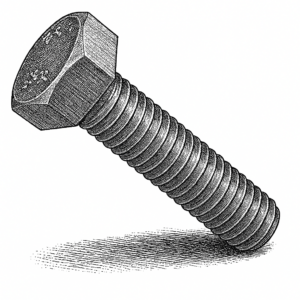
Bolts are one of the most widely used mechanical fasteners in industrial engineering, designed to securely join two or more components together using a threaded shaft and nut. They provide strong, reliable, and removable connections across industries such as construction, oil & gas, petrochemical, marine, power generation, and heavy equipment manufacturing.
Industrial bolts are manufactured to strict international standards including ASTM, DIN, ISO, and BS specifications, ensuring consistent performance in demanding applications requiring high strength, corrosion resistance, and durability.
At The Industrial Mandate, we supply a comprehensive range of high-performance bolts available in stainless steel, alloy steel, duplex, nickel alloys, titanium, and other specialised materials to suit critical environments.
What is a Bolt?
A bolt is an externally threaded fastener typically used with a nut to clamp materials together by applying tightening torque. Bolts are inserted through pre-drilled holes and tightened to create a secure joint capable of handling high loads and vibration.
A standard bolt consists of:
- Head – provides surface for tightening tool
- Shank – smooth portion that aligns components
- Thread – engages with nut or threaded hole
- Tip – assists in installation
Bolts are preferred where strong mechanical joints are required but disassembly for maintenance may be necessary.
Types of Bolts
We supply a wide variety of industrial bolt types suitable for structural, mechanical, and high-temperature applications.
Common bolt types include:
- Hex Head Bolts
- Heavy Hex Bolts
- Socket Head Bolts
- Carriage Bolts
- Flange Bolts
- Eye Bolts
- U Bolts
- Anchor Bolts
- Stud Bolts
- Machine Bolts
Different bolt head styles, thread types, and material grades allow engineers to select the most suitable fastener for each application.
Bolt Materials
Material selection plays a critical role in determining strength, corrosion resistance, fatigue life, and temperature performance.
Common bolt materials include:
Stainless Steel
Provides excellent corrosion resistance and durability in harsh environments.
- 304 Stainless Steel Bolts
- 316 Stainless Steel Bolts
- 410 Stainless Steel Bolts
Alloy Steel
Offers high tensile strength and resistance to heavy mechanical loads.
- B7 Bolts
- B16 Bolts
Nickel Alloys
Designed for extreme temperatures and corrosive environments.
- Inconel Bolts
- Monel Bolts
- Hastelloy Bolts
- Alloy 20 Bolts
Exotic Materials
Used in specialised industries such as aerospace and chemical processing.
- Titanium Bolts
- Zirconium Bolts
Material selection affects mechanical strength, corrosion resistance, and suitability for high-temperature service conditions.
Bolt Standards and Specifications
Industrial bolts are manufactured according to internationally recognised standards to ensure reliability and interchangeability.
Common standards include:
- ASTM (American Society for Testing and Materials)
- DIN (German Institute for Standardization)
- ISO (International Organization for Standardization)
- BS (British Standards)
ASTM standards define mechanical properties, material composition, and performance requirements for bolting used in pressure vessels, pipelines, and structural applications.
Applications of Bolts
Bolts are used in a wide range of industrial sectors:
- Oil & Gas
- Petrochemical plants
- Construction & structural steel
- Marine & offshore engineering
- Power generation
- Heavy machinery
- Automotive manufacturing
- Process industries
Their ability to withstand vibration, high loads, and environmental exposure makes them essential components in safety-critical assemblies.
Why Choose The Industrial Mandate for Bolts?
- Wide range of materials and grades
- Compliance with international standards
- High strength and corrosion resistant options
- Suitable for critical industrial applications
- Available in metric and imperial sizes
- Fast global supply capability
We provide bolts designed for reliability, precision, and long service life in demanding industrial environments.